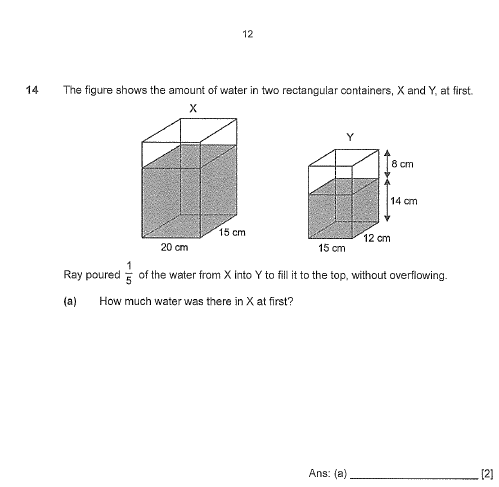
Recently, a PSLE Mathematics question became the subject of discussion in Parliament. During the debate, the Minister highlighted an important educational concept: scaffolding.
The idea is simple but powerful. When students face complex problems, teachers guide them by breaking the question into smaller, manageable steps. Instead of attempting to solve everything at once, students work through a sequence of ideas that gradually leads them to the answer.
At Think Teach Academy, scaffolding is not merely a technique we occasionally use in the classroom. It sits at the core of our teaching philosophy.
But our approach goes one step further. While scaffolding helps students navigate complex problems step by step, our ultimate goal is to help them develop the ability to think from first principles — understanding why each step works, rather than simply memorising procedures.
Interestingly, this philosophy reflects the professional backgrounds of our founding team. Before entering education, our founding team worked in fields such as finance, law and engineering — disciplines where solving complex problems almost always requires structured reasoning and first-principles thinking.
In many ways, the thinking processes used by professionals in these fields are the very skills students need when tackling challenging PSLE questions — not only in Mathematics, but also in English and Science.
Why Structured Thinking Matters Across Subjects

Many PSLE questions appear difficult not because the concepts are beyond students, but because multiple ideas are embedded within a single task.
Students who struggle often attempt to solve everything in one leap.
Stronger problem solvers, however, instinctively break problems down:
- What information is given?
- What concept is being tested?
- What step moves us closer to the answer?
This step-by-step reasoning is what educators refer to as scaffolding.
Over time, students begin to internalise this structured approach. Instead of relying solely on guided steps, they begin to reason from first principles, analysing relationships within a problem and constructing solutions logically.
This mindset applies across subjects.
In Mathematics, it helps students unpack multi-step word problems.
In Science, it helps them understand experiments and explain observations logically.
In English, it helps them organise ideas clearly and construct coherent arguments.
In Finance: Breaking Down Complexity Step by Step

Before entering education, I spent my early career in finance.
One of the first lessons you learn in finance is that complex decisions are rarely made in a single leap. Whether analysing an investment or evaluating a company, the process always begins by breaking the problem down into smaller components.
You start by understanding the business model. Then you examine revenue and costs. After that, you project future performance and analyse risks.
Only after working through these layers do you arrive at a final valuation or decision.
In essence, financial analysis is structured reasoning applied to decision-making. Each step builds on the previous one, and skipping steps almost always leads to mistakes.
This way of thinking strongly influenced how we designed the teaching approach at Think Teach Academy.
In PSLE Mathematics, this may mean helping students break down a complex problem into smaller parts — identifying known quantities, recognising the concept being tested, and working step by step towards the solution.
In Law: Building an Argument Step by Step

My co-founder Algene brings a similar perspective from his years as a practising corporate lawyer, and is currently pursuing a PhD in law.
In legal practice, arguments are rarely constructed by jumping straight to a conclusion. Instead, legal reasoning follows a structured process.
A lawyer first identifies the legal issue.
Then the relevant statutes and precedents are examined.
Next, the facts of the case are analysed in relation to those legal principles.
Only after this structured analysis does the lawyer construct a reasoned argument.
Good legal reasoning is therefore deeply structured and layered, with each step supporting the next.
This pattern of reasoning closely mirrors the thinking students need when approaching complex academic tasks.
In PSLE English, for example, students often need to explain their answers in comprehension questions. Strong responses do not simply state an answer — they justify it with evidence from the passage, building a clear line of reasoning.
Similarly, when writing compositions, students must structure their ideas logically so that events unfold coherently and meaningfully.
In Engineering: Designing Solutions from First Principles

Our third partner, Dr Boon, adds another dimension to this philosophy through his background in engineering.
With a Master’s in Nuclear Engineering and a PhD in Solar Engineering, Dr Boon trained in a discipline where precision and structured thinking are absolutely essential.
In engineering, complex systems are never designed by guessing the final outcome. Engineers begin by defining the problem and constraints. They analyse forces, materials and safety requirements. They build models, test assumptions and refine designs step by step.
At its core, engineering often relies on first principles thinking — starting from fundamental laws and reasoning outward to construct solutions.
In fields such as nuclear engineering, this approach is not merely helpful — it is critical.
The same principle applies in PSLE Science. When students are asked to explain experimental results or predict outcomes, they must reason from fundamental scientific concepts.
Rather than memorising answers, they need to understand relationships such as cause and effect, variables in an experiment, and how different concepts connect.
Bringing These Ideas Into the Classroom
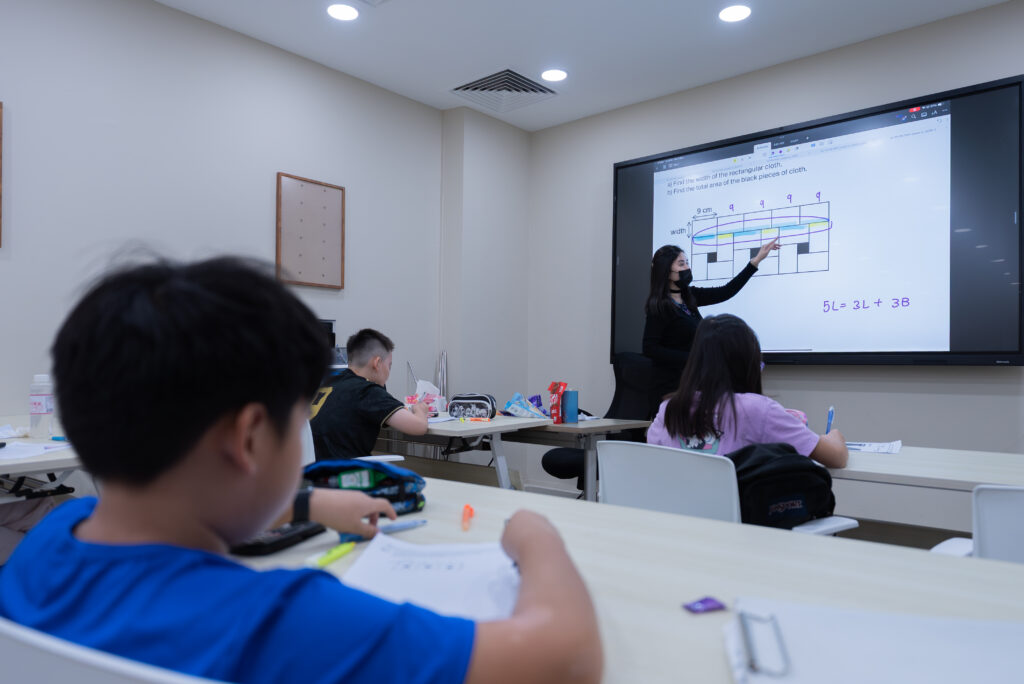
The professional experiences of our founding team shaped the philosophy behind Think Teach Academy.
Rather than focusing solely on memorising methods, we place strong emphasis on helping students develop structured thinking habits.
Through scaffolding, students learn to:
- break down complex questions
- identify the key ideas being tested
- work through problems step by step
As they become more confident, they gradually develop the ability to reason from first principles.
This mirrors how complex challenges are solved in fields such as finance, law and engineering.
And it explains why both scaffolding and first-principles thinking are central to our teaching approach.
When students learn to approach problems in this way, questions that initially appear difficult become far more manageable.
They gain clarity, confidence and the ability to tackle unfamiliar problems logically.
These skills are valuable not only for PSLE Mathematics, but also for English comprehension, composition writing, and scientific reasoning.
At Think Teach Academy, our programmes are designed to help students develop exactly these capabilities — not only to perform well in exams, but to build the kind of thinking skills that will benefit them long after the PSLE is over.

Yours In Education
Shou Yee
Co-Founder