I can still remember the most nerve-racking moment of my scholarship interview.
We had just completed a group discussion — three hours spent brainstorming and strategising with five other candidates I had come to know quite well. Together, we worked on a business case study, presenting ideas to improve a cheese company’s operations. The session had been intense but friendly, and we had built a genuine sense of camaraderie.
Then came the panel interview.
Sitting in front of the panel along with my other team mates, I was asked a question I didn’t expect:
“Name two of your teammates whom you think are the weakest.”
I was completely caught off guard.
How was I supposed to answer that? I truly felt that everyone had contributed meaningfully. But I also knew this was a crucial moment — my shot at the Lee Kong Chian Scholarship at SMU was on the line. I took a deep breath, named two teammates, and gave my justifications.
Walking out of the interview room was one of the hardest parts. I struggled to make eye contact with the two people I’d just named. The dynamic had shifted. What had been warm and collaborative now felt cold and awkward.
Even though that moment didn’t feel great, I’m grateful for the experience.
That was my first real taste of a competitive interview. Since then, I’ve gone on to do a double degree in finance under a scholarship programme — which meant applying to top finance internships and graduate schemes. That also meant going through many rounds of assessments, from case discussions to personal interviews, often with interviewers from global banks in the US or Europe.
And many times, I failed. Not because I wasn’t capable — but because I wasn’t prepared. The questions were unfamiliar. The expectations were different.
And it made me reflect:
Why did I only start learning these soft skills at 18?
Why did I have to be thrown into the deep end before I even understood what personal branding meant?
The truth is, in our school system, these soft skills just aren’t taught enough. Sure, students do group projects or give presentations — but they’re nothing like the high-stakes, high-pressure situations you face in competitive applications.
And that’s what drives me today.
When Algene convinced me to leave my finance job to co-found Think Teach Academy, I knew we had to build something bigger than just academic tutoring. I wanted us to create a space where students could learn how to reflect, communicate, and express who they are with authenticity.
Because when parents ask me,
“Should my child apply for DSA?”
My answer is always: Absolutely. Do it.
There’s no downside — just time and effort. And in return, your child develops essential skills:
- Self-awareness
- Clear communication
- The ability to present a coherent, compelling personal story
You don’t need medals or national achievements to succeed. What matters is being able to tell your story in a way that aligns with what the school or panel values.
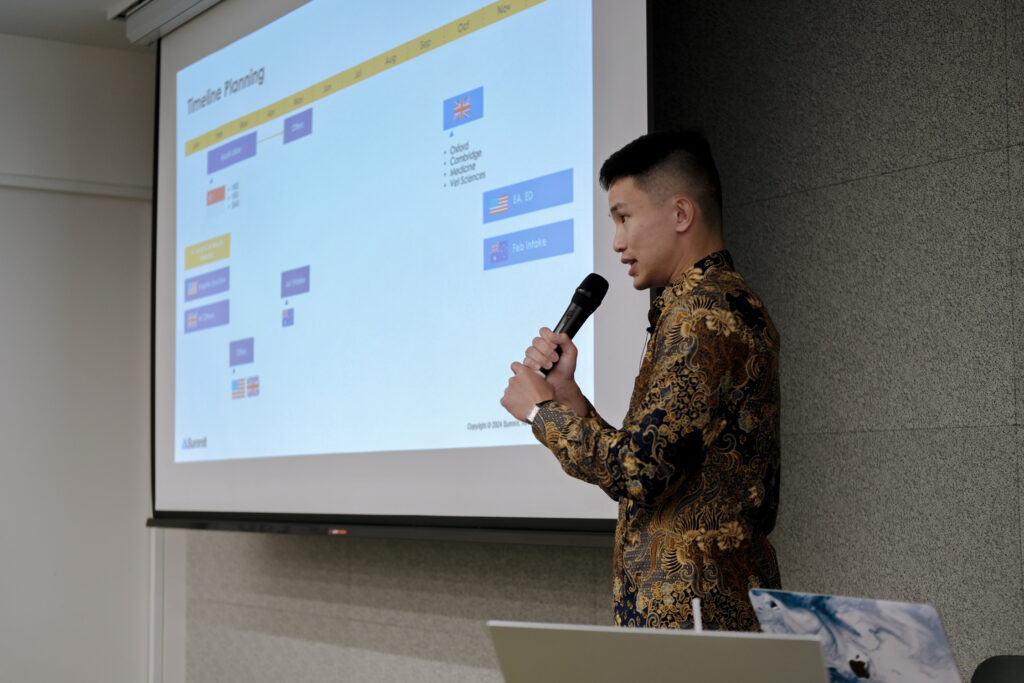
At Think Teach, we’ve helped hundreds of students through the DSA journey — and what we’re most proud of isn’t just the school offers. It’s the transformation. It’s seeing a quiet Primary 5 student who doesn’t think they’re “good enough” grow into someone who can speak confidently about their values, goals, and interests.
I never had that opportunity as a child. I had to wait until I was 18 to go through it all, fumbling and learning along the way.
But your child doesn’t have to.
DSA is the perfect training ground — not just for school admissions, but for life. It’s a safe place to build a profile, develop interview skills, and learn to articulate a personal brand.
And when the bigger challenges come — scholarships, internships, job interviews — they’ll be ready.
If you’d like to find out how to position your child for DSA success, we’d love to speak with you.
Let us help your child discover who they are — and learn how to communicate that proudly to the world

Yours In Education
Shou Yee
Co-Founder